

Quick Answer: Safe installation involves positioning a safe in a secure location and anchoring it to a suitable floor or structural surface. Proper anchoring makes it harder for someone to remove the entire safe during a burglary.
The best installation location depends on the safe’s weight and size as well as the floor construction and access requirements. Concrete floors generally provide a strong anchoring surface when you use the right fasteners. Wood floors require suitable structural support beneath the finished flooring.
A home or business safe protects valuables from unauthorized access. However, a safe that isn’t properly secured may be easier to remove than you think. Even a heavy model can be vulnerable if it sits on an unsuitable surface without proper anchoring.
Professional safe installation involves more than drilling holes and tightening bolts. The installer must assess the floor construction and safe design before choosing an anchoring method. The location must also allow convenient access without making the safe unnecessarily visible.
In Phoenix, AZ, homeowners and businesses should also consider slab construction and the condition of the installation area. These factors influence the fasteners and preparation required for a secure setup.
Key Takeaways
- Anchoring a safe helps prevent unauthorized removal.
- Concrete and wood floors require different fastening methods.
- The safe manufacturer’s instructions determine approved mounting points.
- A suitable location should provide privacy and convenient access.
- Heavy safes may require professional handling and floor assessment.
- Professional installation helps prevent damage to the safe and surrounding structure.
Why Should You Bolt Down a Safe?
Bolting down a safe reduces the risk of theft by making it harder to lift or move. It also helps prevent tall safes from tipping when someone opens the door.
Prevents Unauthorized Removal
A heavy safe is not necessarily difficult to steal. Several people with moving equipment may be able to remove a freestanding unit from a property. A bolt down safe has anchor points connected to the floor. These fasteners create additional resistance against lifting and movement. They also make it harder for someone to turn the safe onto its side.
Reduces the Risk of Tipping
Tall gun safes can become unstable when their doors are fully open. This is especially important when the safe contains heavy equipment or accessories stored toward the front. Anchoring the base helps keep the unit in position. It also reduces the risk of accidental tipping that could cause injuries or damage to nearby furniture.
Protects the Safe During a Break-In
Burglars may try to move a safe into a more convenient position before attempting to force it open. A securely anchored unit limits this opportunity. The mounting hardware also reduces the amount of movement that could create leverage around the door. However, anchoring does not make a safe impossible to break into. The safe’s construction and locking system remain important.
Supports Safe Everyday Use
A properly secured safe remains stable when users open the door or retrieve stored items. This makes everyday access more convenient. It is particularly useful for tall gun safes and larger commercial models. Proper leveling also helps the locking mechanism and door operate as intended.
Where Is the Best Place to Install a Safe?
The best location provides a stable anchoring surface and enough room to operate the door. It should also offer privacy and protection from avoidable environmental risks.
A Concrete Floor in a Secure Room
A concrete slab is generally a suitable surface for anchoring a heavy safe. It can provide a solid foundation for approved concrete anchors when the slab is sound, and the installation follows manufacturer specifications. A utility room or secure storage area may offer suitable placement. Check the surrounding structure and confirm that the chosen spot allows the safe to sit level.
A Corner Against Two Walls
A corner can provide additional physical resistance against movement. Two adjoining walls limit the directions in which someone can tilt or shift the safe. Leave enough clearance for the door to open fully. The location should also allow access to the locking mechanism and interior shelves.
A Ground-Floor Storage Area
A ground-floor location can make it easier to support and move a heavy safe. It may also provide direct access to a concrete slab. Before choosing a location upstairs or on a raised floor consider the combined weight of the safe and its contents. A structural professional may need to assess the floor’s load capacity.
A Private Area Away From Frequent Visitors
A safe does not need to be visible to everyone who enters a property. A private room or secured closet can reduce unnecessary exposure. Avoid locations where visitors or contractors can easily observe the safe and its access routine. Keep the area accessible to authorized users without advertising what is stored inside.
Away From Water and Excessive Moisture
Moisture can cause corrosion and damage stored documents or valuables. Avoid placing a safe directly beside plumbing connections or in areas with a history of water intrusion. In Phoenix homes, consider the possibility of water entering through garage doors or during heavy monsoon rainfall. A suitable location should remain dry and should not create unnecessary exposure to flooding.
Local Installation Considerations:
Arizona property owners should distinguish between anchoring a safe inside an existing slab and excavating a new opening for an in-floor safe. For outdoor excavation or digging projects that may affect underground utility lines, consult Arizona 811 before work begins. Its utility-marking service addresses underground facilities and does not replace an assessment of concealed lines or reinforcement inside an existing concrete slab.
How to Install a Safe on Concrete and Wood Floors
The installation method depends on the floor material and the safe’s mounting design. Concrete anchors and wood fasteners are not interchangeable.
Inspect the Safe and Read the Manufacturer’s Instructions
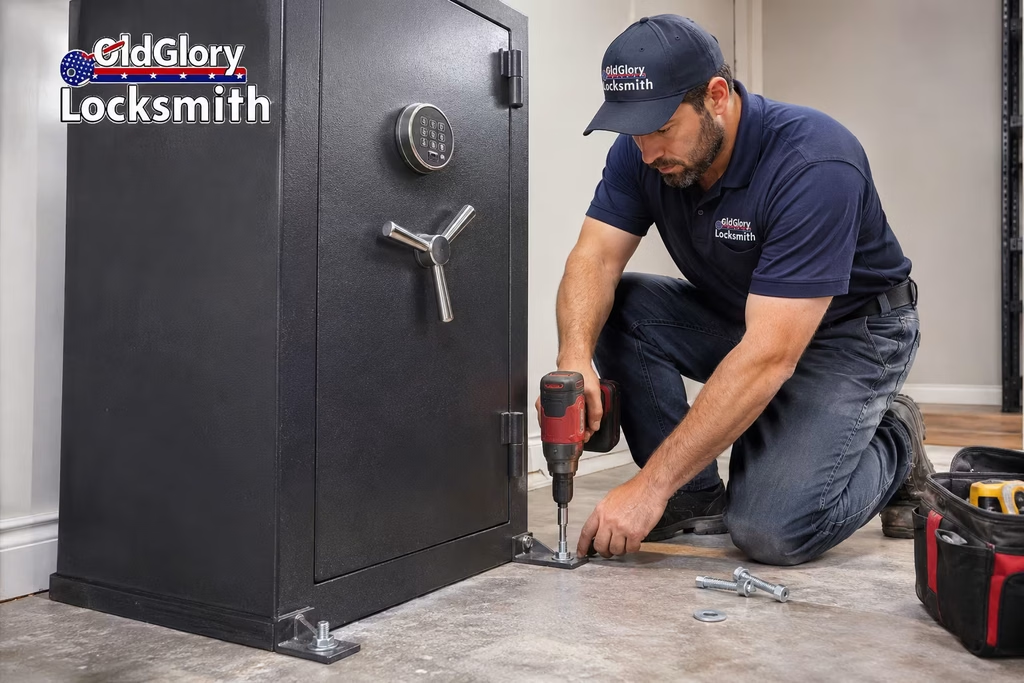
Start by checking the safe’s model and its installation manual. Look for factory-installed mounting holes and the approved anchor specifications.
- Some safes have removable interior caps that provide access to the mounting points. Others have different base designs that require specific installation procedures.
- Never drill through an unapproved part of the safe. Doing so may damage its construction or interfere with its fire protection and warranty.
Check the Floor and Final Position
Inspect the floor before moving the safe into place. Look for cracks and uneven areas that could affect stability. For concrete floors, identify potential reinforcement and concealed services before drilling. For wood floors, locate the structural joists and confirm that the floor assembly can support the loaded safe.
| Tip 1: Measure the safe and the available space before installation. Check the door swing and the route through hallways and doorways. |
Prepare the Mounting Surface
The safe should sit firmly on a level surface before anchoring begins. Uneven positioning can cause movement and interfere with proper door operation. Use manufacturer-approved shims where necessary. Avoid improvised materials that could compress or shift under the safe’s weight. Remove packaging and debris from the installation area. Make sure the mounting points remain accessible.
Choose the Correct Anchoring Method
The correct hardware depends on the floor material and the safe manufacturer’s specifications.
| Floor type | Common anchoring approach | Important consideration |
|---|---|---|
| Concrete slab | Approved concrete anchors | Check slab condition and concealed services |
| Wood subfloor | Suitable structural fasteners | Locate joists and verify support |
| Tile over concrete | Approved anchors through the finish | Prevent tile damage and confirm the substrate |
| Raised floor | Engineered structural support | Confirm load capacity before installation |
For anchoring a safe to concrete, the installer must select hardware that matches the safe’s mounting holes and the concrete conditions. The anchor must engage suitable material rather than relying on the surface finish.
For a wood floor, the fasteners must reach appropriate structural support. Attaching a heavy safe to a thin flooring layer alone does not provide reliable anchoring.
Secure the Safe and Check Its Operation
After the correct mounting points and hardware have been selected, the installer secures the safe according to the manufacturer’s instructions.
The safe should remain level and stable throughout the process. Once installation is complete, the installer should check the door alignment and locking mechanism.
Open and close the door several times. Confirm that the bolts and mounting hardware do not interfere with interior components.
| Pro Tip: Keep the installation manual and hardware specifications with your safe records. This information is useful if the unit needs to be moved or serviced later. |
Phoenix-Specific Safety Note:
The City of Phoenix Building Construction Codes page identifies the city’s adopted construction standards. Do not assume that every safe anchor installation requires a building permit. However, structural alterations and more extensive floor modifications should be evaluated under the applicable local requirements.
Safe Installation in Phoenix, AZ: Local Factors to Consider
Phoenix properties can have different floor assemblies and foundation conditions. A location that works for one property may not be suitable for another.
Concrete Slab Construction
Many Phoenix homes have slab-on-grade foundations. These can provide a suitable anchoring surface for compatible safes. However, the presence of concrete does not automatically mean drilling is safe. Some slabs contain reinforcement or post-tension components that can be damaged by careless drilling.
Have the installation area assessed before drilling. Never assume that a particular section of concrete is clear simply because it looks solid.
Garage Temperature and Moisture
Garages are common storage areas for large safes because they often have accessible floor space. However, temperature changes and moisture exposure deserve attention.
- A safe should not be placed where water can collect around its base. Keep it away from direct exposure to leaking equipment and poorly sealed exterior openings.
- Consider a suitable moisture-control method when storing firearms or metal valuables. The safe’s interior may need additional humidity management depending on its construction and contents.
Access During Monsoon Season
Phoenix experiences seasonal monsoon storms that can bring heavy rainfall and localized flooding. A garage or ground-level storage area should be evaluated for water entry.
- Avoid low spots where runoff may collect. If the property has known drainage problems, consider a higher and drier installation location.
- The City of Phoenix provides floodplain management information for property owners who need to review mapped flood hazards.
Safe Placement in Homes and Businesses
Residential and commercial properties have different security requirements. A home safe may fit inside a private closet, while a business may need a more accessible location for authorized employees. Business safe options and features should also be considered when choosing a suitable safe for protecting valuables and sensitive materials.
Consider who needs access and how often the safe will be used. Avoid placing it where customers or visitors can observe the access process.
Professional Handling of Heavy Safes
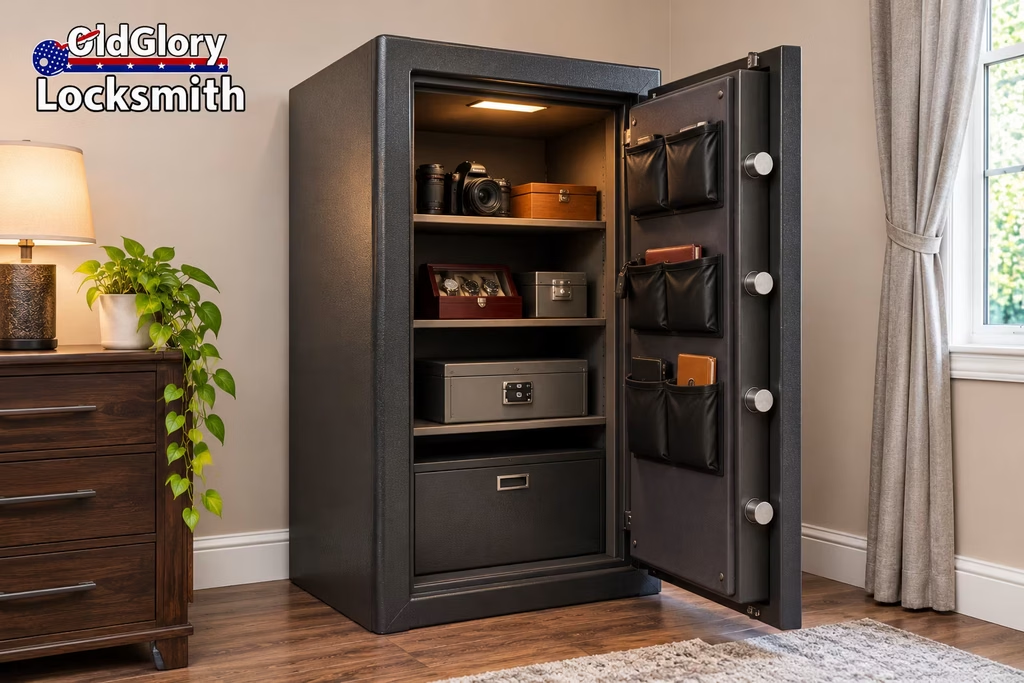
Large safes can weigh hundreds of pounds before contents are added. Moving them without suitable equipment can damage floors and cause serious injuries.
- Professional planning helps account for stairways and narrow passages as well as door clearance and final positioning. It also helps identify whether the selected floor can support the unit.
- For safe installation, Phoenix, AZ property owners should consider both the anchoring surface and the property’s layout before selecting a final position.
Choosing the Right Safe for Your Property
The right safe should match the items you intend to protect and the location where it will be installed. Size and weight are important, but construction quality and locking features also matter.
Home Safes
Home safes are suitable for documents and smaller valuables. Many models include factory mounting holes for securing the unit to a floor or wall. Choose a model that fits the available space without making access difficult. Check its mounting requirements before purchasing.
Gun Safes
A gun safe installation requires attention to the safe’s height and weight as well as its mounting points. Larger models may need additional handling equipment and a careful floor assessment. Consider interior capacity and locking features. A secure storage device should restrict unauthorized access while allowing responsible owners to use it safely.
Commercial Safes
Commercial safes are designed for business valuables and sensitive materials. They may have larger bodies and different anchoring requirements than residential models. Consider the safe’s location in relation to employee access and business operations. A suitable position should allow authorized users to operate the safe without obstructing daily activities.
Floor Safes
A floor safe installation places the unit inside a prepared opening in the floor. This can provide concealment and reduce the amount of the safe that remains visible. Unlike ordinary bolt-down installation, this process may involve cutting or excavating concrete. It requires careful planning around structural components and plumbing. The installation should also account for drainage and moisture protection. Improper placement can expose stored items to water damage.
Common Safe Installation Mistakes to Avoid
Small installation errors can reduce stability and damage the safe or surrounding floor. Reviewing these issues before the work begins helps prevent expensive corrections.
Using the Wrong Anchors
Concrete and wood require different fastening systems. Using an unsuitable anchor may prevent the safe from being secured properly. Always follow the safe manufacturer’s hardware recommendations. Do not select fasteners based only on their appearance or size.
Ignoring Floor Conditions
A damaged or uneven floor can affect safe stability. A raised floor may also lack the structural support required for a heavy unit. Inspect the installation area before positioning the safe. Get professional advice when the floor’s condition or load capacity is uncertain.
Blocking the Door Swing
A safe may fit inside a closet but still be difficult to operate. Nearby walls and furniture can prevent the door from opening fully. Measure the door clearance before final placement. Allow enough room to remove shelves and access stored items.
Drilling Without Checking the Slab
Concrete can contain reinforcement and concealed services. Drilling without checking the area can cause expensive damage. This is especially important when planning a floor safe or modifying an existing concrete surface. Use appropriate detection and assessment methods before drilling.
Treating Weight as a Replacement for Anchoring
A heavy safe can still be moved with suitable equipment. Weight alone does not guarantee protection against removal. Anchoring provides an additional layer of physical security. The installation should match the safe’s design and the supporting floor.
Frequently Asked Questions
Where is the best place to bolt down a safe?
A concrete floor in a private room or secure storage area is often a suitable choice. A corner can provide additional resistance against movement. The final location should allow full door operation and provide a stable anchoring surface.
Should a safe be bolted down?
Yes. Bolting down a safe generally improves security and reduces the risk of tipping. Follow the manufacturer’s instructions to select compatible hardware and mounting points.
How are safes bolted to the floor?
Safes are secured through designated mounting holes using anchors or fasteners suited to the floor material. Concrete requires compatible concrete anchors, while wood floors need suitable structural fasteners. The safe must be level before the installation is completed.
Where is the safest place to put a safe in your house?
A private ground-floor room with a suitable concrete slab can be a good option. Choose an area that is difficult for visitors to observe and remains protected from water. Check floor support and door clearance before deciding on the final position.
What is the best bolt-down safe for home use?
The best model depends on what you want to store and the security features you need. Look for a well-constructed safe with a reliable locking system and manufacturer-approved mounting points. Check its dimensions and weight against your available floor space before purchasing.
How to secure a safe without bolting it down?
If drilling is not possible, consider a safe designed for alternative mounting arrangements. Some units may be secured to suitable structural supports or placed inside a locked built-in enclosure. However, these alternatives do not necessarily provide the same resistance as proper floor anchoring. Ask a qualified installer to assess the available options.
Conclusion
A properly installed safe provides more than a secure storage space. Its position and anchoring method influence how well it resists unauthorized movement and how easily authorized users can access it. Choosing the correct floor surface and compatible mounting hardware is essential for a stable installation.
Before starting the work, consider the safe’s dimensions and weight as well as the property’s floor construction. Avoid drilling without checking for concealed components and always follow the manufacturer’s instructions. Old Glory Locksmith can assist property owners looking for professional safe installation in Phoenix, AZ.
Contact a Professional Safe Locksmith in Phoenix, AZ
Choosing an experienced safe locksmith helps ensure your safe is positioned correctly and secured with suitable anchoring hardware. Old Glory Locksmith assists property owners with safe-related locksmith needs and professional installation guidance. Whether you need help with a home safe or a gun safe, contact the company to discuss your requirements.
Call (602) 696-0763 or email cory@corybahr.com to get started.
Sources
Arizona Corporation Commission – Arizona 811: Explains underground utility marking and the importance of checking utility locations before excavation.
City of Phoenix – Building Construction Codes: Provides Phoenix construction code information and adopted building standards.
ATF – Firearms Questions and Answers: Explains the federal definition of secure gun storage devices and related firearm safety requirements.