

Summarize with
Door locks require replacement when they exhibit visible metal fatigue, fail to operate smoothly, or no longer meet modern security standards. Homeowners should prioritize a door lock replacement service if hardware has been bypassed during a break-in, if keys are lost or stolen, or if the property has recently changed ownership. Identifying these warning signs early prevents total lock failure and ensures the ongoing safety of the household.
This guide provides an expert look at specific indicators that suggest your current hardware is compromised. Drawing on years of experience in residential locksmith services, these observations help property owners make informed decisions regarding their home security. Understanding when to replace door locks is the first step in maintaining a secure perimeter against unauthorized entry.
Primary Indicators for Home Lock Replacement
Maintaining hardware is often overlooked until a key breaks or a door fails to open. However, mechanical components wear down over time, making regular inspections of entry points vital to identifying vulnerabilities before they lead to an emergency.
1. Visible Wear and Corrosion
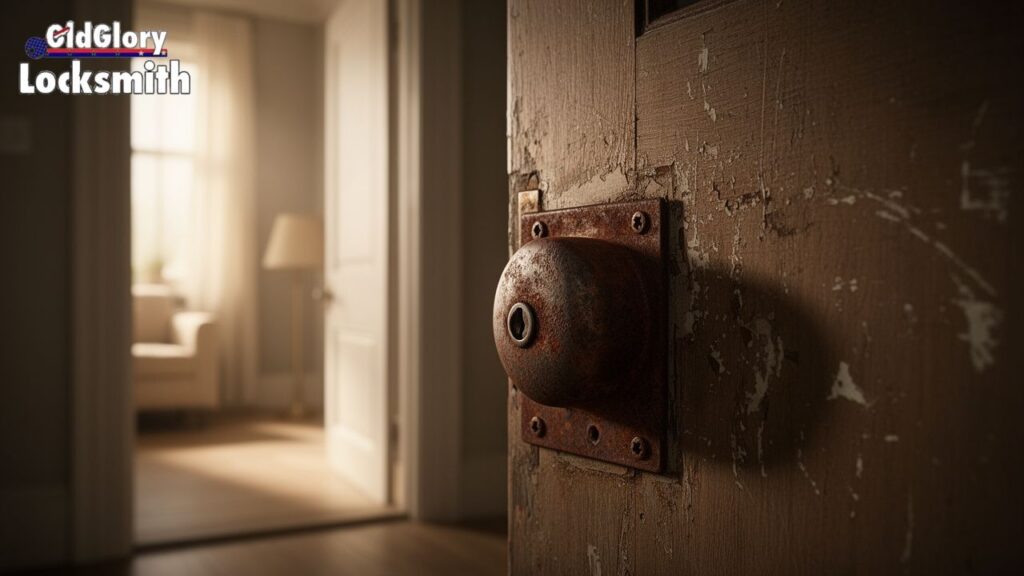
Metal components inside a lock cylinder eventually succumb to environmental factors. If the lock body shows signs of heavy tarnish, rust, or oxidation, the internal pins and springs are likely deteriorating as well. Corroded locks are significantly easier to pick or break because the metal becomes brittle.
According to technical specifications from the Builders Hardware Manufacturers Association, lock finishes and internal parts are tested for atmospheric resistance, but high humidity or salt air can accelerate decay. When rust builds up inside the keyway, it creates friction that prevents the pins from moving freely. This eventually leads to a situation where the lock can no longer be engaged or disengaged. Replacing the hardware at the first sign of deep corrosion prevents the frustration of being locked out of the house.
2. Difficulty Operating the Key
A functioning lock should allow the key to slide in and turn with minimal resistance. If the key sticks, grinds, or requires significant force to turn, these are mechanical red flags that should not be ignored. This resistance often indicates that the internal wafers or pins have worn down or that the plug has become misaligned.
Forcefully turning a key in a struggling lock often leads to the key snapping off inside the cylinder. This creates a more expensive problem than a simple home lock replacement. While some minor sticking can be resolved with graphite lubricant, persistent mechanical resistance suggests the internal tolerances have failed. If the keyway feels “mushy” or loose when the key is inserted, the internal springs have lost their tension and can no longer hold the pins in the correct position for secure operation.
3. Structural Damage After a Break-in
Any attempt at forced entry can compromise the integrity of a locking mechanism. Even if the intruder was unsuccessful, the pressure applied to the bolt or the cylinder can warp the internal components. Statistics from the Federal Bureau of Investigation show that a significant percentage of burglaries involve forcible entry, which often leaves the door hardware permanently weakened.
A lock that has been hit with a hammer, pried with a screwdriver, or subjected to a heavy kick may look functional on the exterior but possess internal fractures. These invisible cracks make the lock much more susceptible to a second attempt. After any security event, a full door lock replacement service is the only way to ensure the entry point is restored to its original strength.
4. Lost or Stolen Keys
Security is about more than just the physical strength of the metal; it is about access control. If keys are lost or stolen, the physical lock remains functional, but the security of the home is gone. There is no way to know who might have found the keys or if they were taken by someone who knows the address.
In many cases, homeowners opt for rekeying, which involves changing the internal pins to fit a new key. However, if the locks are older or show other signs of wear, it is often more cost-effective to replace your door locks entirely. Homeowners comparing replacement expenses may also benefit from reviewing locksmith pricing factors before making a decision.
5. Moving into a New Residence
Purchasing a new home or moving into a rental property is a major life event that requires an immediate security audit. It is impossible to track how many duplicates of the current keys exist. Contractors, real estate agents, previous tenants, and neighbors may all have copies of the keys to the front door.
A study regarding home security habits by SafeWise suggests that many people wait weeks or months before Lock technology evolves to counter new methods used by criminals. Older locks are often vulnerable to techniques like lock bumping or snapping. As modern vehicle and access-control systems become more advanced, understanding the differences between various electronic entry technologies can also help property owners make better security decisions. hanging their locks after a move. This delay creates an unnecessary window of vulnerability. Installing new hardware immediately upon taking possession of the property ensures that only authorized individuals have access to the home. This practice provides peace of mind and establishes a fresh maintenance schedule for the new hardware.
6. Outdated Security Technology
Lock technology evolves to counter new methods used by criminals. Older locks are often vulnerable to techniques like lock bumping or snapping. Lock bumping involves using a specially cut “bump key” to manipulate the pins and open the cylinder in seconds. If a lock is more than ten years old, it likely lacks the anti-bump and anti-pick features found in modern Grade 1 or Grade 2 hardware.
The National Insurance Crime Bureau frequently highlights the importance of using updated hardware to deter theft. Modern locks often include hardened steel inserts that resist drilling and specialized pin configurations that make picking nearly impossible for the average intruder. If the current locks are basic models from a local hardware store, upgrading to professional-grade residential locksmith services can provide a substantial increase in protection.
7. Loose or Wobbly Hardware
If the door handle or deadbolt feels loose against the door, it may indicate that the mounting screws are stripped or the internal chassis is falling apart. Wobbly locks are a major security risk because they can often be bypassed by simply pulling the hardware away from the door face.
Internal screws can vibrate loose over years of use, but if tightening them does not fix the “play” in the handle, the internal housing has likely failed. This is common in high-traffic doors where the constant torque of turning the handle wears down the soft metal of the chassis. A stable, firm lock is a sign of a secure door, while a loose one is an invitation for trouble.
| Security Issue | Potential Risk Level | Recommended Action |
|---|---|---|
| Surface Tarnishing | Low | Clean and monitor for deep rust |
| Sticking Key | Medium | Lubricate; replace if sticking persists |
| Lost Keys | High | Replace or rekey immediately |
| Post-Break-in | Critical | Full lock and strike plate replacement |
| Outdated ANSI Grade | Medium | Upgrade to Grade 1 or 2 deadbolts |
Bonus Tip: When choosing new hardware, look for the ANSI/BHMA grading on the packaging. Grade 1 is the strongest, often used for commercial purposes, while Grade 2 is the highest standard typically recommended for residential exterior doors.
Evaluating Your Security Options Before Taking Action
After recognizing these indicators, but before proceeding with a door lock replacement service, homeowners should assess a few specific factors to ensure they choose the right hardware for their needs. Not every door requires the same level of security, and the physical condition of the door itself plays a role in the effectiveness of the new lock.
- Door Material and Condition: A high-end deadbolt will not provide much protection if the door frame is soft or rotting. Ensure the wood can support the new hardware.
- Strike Plate Strength: The strike plate is the metal piece on the door frame where the bolt enters. Using long, three-inch screws that reach into the wall stud is just as important as the lock itself.
- Key Alike Options: If replacing multiple locks, consider buying sets that are “keyed alike” so one key opens every exterior door.
- Smart vs. Traditional: Determine if the convenience of a keypad or smart lock outweighs the simplicity of a traditional mechanical deadbolt.
Common Questions Regarding Door Security
Addressing common misconceptions about when to replace door locks can save homeowners time and money. Security issues often extend beyond traditional door hardware and may involve electronic access devices that require troubleshooting or replacement. Many people believe that as long as a lock turns, it is safe, but security is often about the features you cannot see from the outside.
Is rekeying the same as replacing? No, rekeying only changes the internal pins so a new key works. The physical hardware, including the housing and the bolt, remains the same. If the lock is worn out or damaged, rekeying will not fix the underlying mechanical issues.
How often should locks be replaced? Most residential locks have a functional lifespan of about seven to ten years. However, this varies based on usage and weather exposure. If a lock is used dozens of times a day, it may need replacement much sooner.
Can I install a high-security lock myself? While many deadbolts are designed for DIY installation, professional residential locksmith services ensure that the door and frame are properly aligned. Even a slight misalignment can make a high-security lock easy to bypass or cause it to wear out prematurely.
Frequently Asked Questions
Does a heavy door handle mean the lock is more secure?
Weight does not always correlate with security. While a heavy handle often indicates better materials, the security rating depends on the internal cylinder and the length of the deadbolt. Always check for the ANSI Grade 1 or 2 rating rather than relying on the weight of the hardware.
Will WD-40 fix a sticking lock?
It is generally advised to avoid WD-40 for long-term lock maintenance. It is a solvent that can attract dust and grime over time, eventually gunching up the pins. Instead, use a dry graphite lubricant or a specialized silicone-based lock lubricant.
What is the difference between a deadbolt and a spring latch?
A spring latch is the handle lock that can be retracted by sliding a credit card or tool against the curved latch. A deadbolt is a solid metal bolt that must be manually turned. For true security, every exterior door should have a deadbolt in addition to a handle lock.
Should I replace my locks if I lose only one copy of the key?
If the key was lost in a public place where it cannot be linked to your address, the risk is lower. However, if any identification or mail was with the key, or if you suspect it was stolen, you must replace your door locks immediately to maintain safety.
Do electronic locks require more maintenance?
Electronic locks require battery changes and occasional software updates if they are “smart” models. Mechanically, they have similar wear patterns to traditional locks, but the electronic components can be sensitive to extreme temperatures or moisture.
Summary of Key Takeaways
Identifying the signs you need to replace your door locks is essential for home safety. Whether dealing with physical rust, the aftermath of a break-in, or simply moving into a new space, proactive replacement prevents security failures. Always look for mechanical red flags like wobbly handles or keys that are difficult to turn. Old Glory Locksmith suggests that homeowners evaluate their hardware annually to catch these issues early. By choosing high-quality, graded hardware and ensuring proper installation, property owners can protect their families and belongings effectively.
Professional Assistance for Your Home Security
When security concerns arise, professional expertise ensures that your home remains a safe haven. Old Glory Locksmith provides comprehensive residential locksmith services and professional door lock replacement services for all types of properties. Whether you need to upgrade to high-security deadbolts or require an emergency replacement after a lost key, the team is ready to help. Emergency lockouts can happen unexpectedly, and knowing the proper steps to take before calling a locksmith can reduce stress and prevent additional damage. You can reach out via phone at 602-696-0763 or email at cory@corybahr.com to discuss your specific needs. Taking a proactive approach to your door hardware is a simple way to maintain the integrity of your home’s perimeter.
Sources
- Builders Hardware Manufacturers Association – Official standards for hardware grading and testing protocols.
- Federal Bureau of Investigation – National crime statistics and reports regarding residential burglary and entry methods.
- National Insurance Crime Bureau – Resource for theft prevention and information on modern security vulnerabilities.
- SafeWise – Home safety research and consumer guides on security habits and technology.